A buyer who lives abroad, a family choosing a holiday home from another country or an investor with only one weekend on the coast cannot visit every property on their list. A virtual tour lets them walk through a property first, on any device, and decide which ones deserve the trip.
This article explains what a 360° virtual tour adds to a listing, when it pays off, what separates a good tour from a weak one and which questions are worth asking a provider before you commission one. It also shows how a tour fits with photographs and floor plans.
What a 360° virtual tour adds to a listing
A 360° virtual tour is an interactive representation of a property. The viewer moves from room to room by clicking or tapping, looks around freely at each point and can return to any space, on a phone, a tablet or a computer. Ours are built and hosted on Matterport, and they are compatible with Idealista and many other portals.
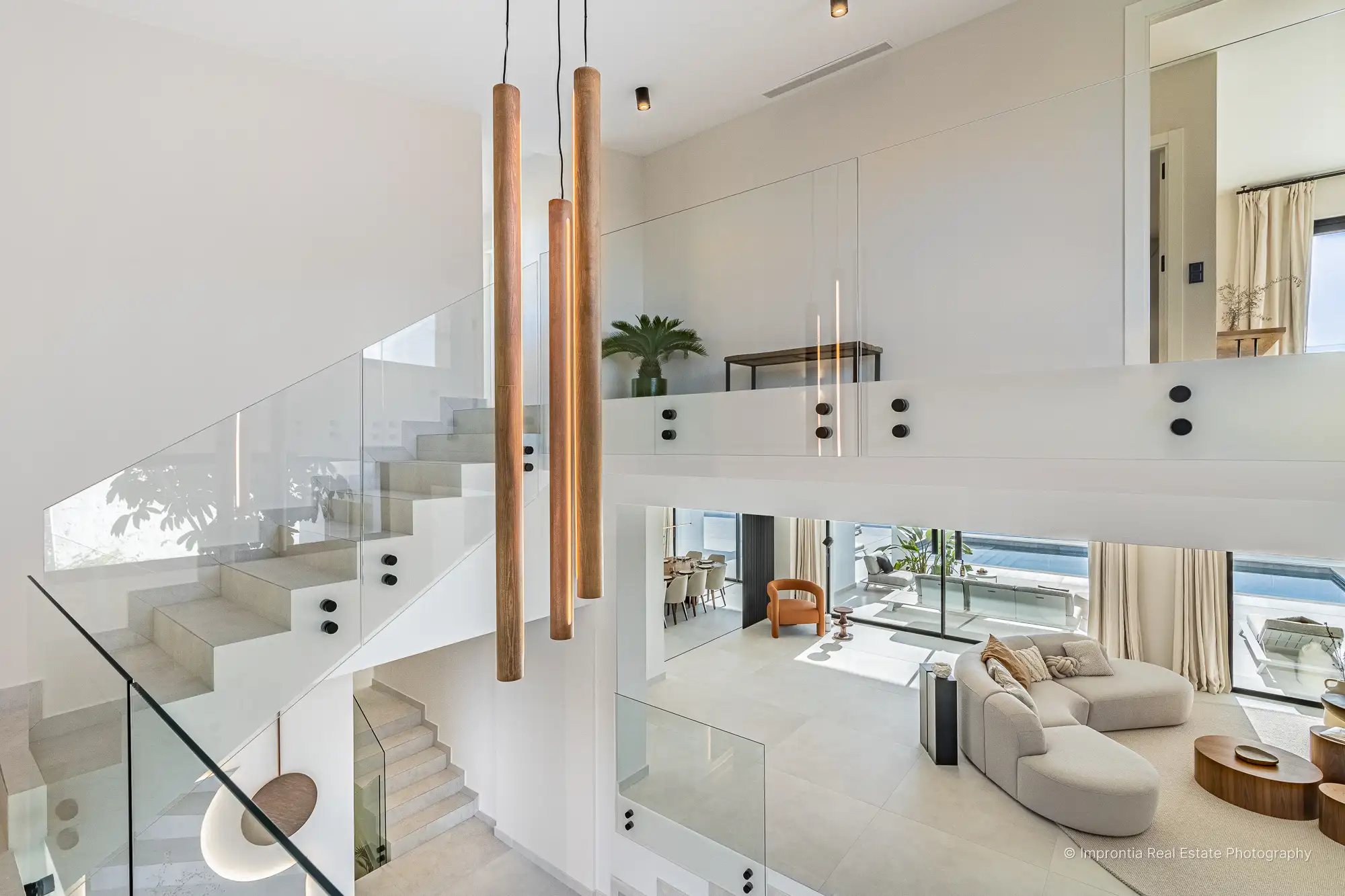
What a tour adds is the sense of how a property fits together. A photograph shows a room at its best, from its best angle. A tour shows the connections: how the kitchen opens onto the terrace, how far the bedrooms are from the living room, how a staircase links two levels. For viewers who cannot visit, that continuity can be what turns interest into a decision to travel.
It is a complement, not a replacement. Photographs lead the listing, a floor plan explains the layout and the tour lets interested viewers explore at their own pace.
What the viewer experiences
For the person looking at the screen, a good tour feels continuous. The transitions are smooth, it is easy to tell where you are and it takes one click to return to any room. Most tours run in a browser on a phone, a tablet or a computer, without installing anything, although it is worth confirming with each provider.
When a 360° virtual tour makes the most sense
- Houses and villas with several rooms and levels, where the way spaces connect is part of the value.
- Complex layouts, such as large open-plan rooms, mezzanines or terraces at different heights.
- Remote buyers and second-home hunters who cannot visit before shortlisting.
- Vacation rentals, where guests need to understand the sleeping arrangements and the outdoor areas before they book.
- Larger properties and developments that gain from an overview of the whole.
The Costa del Sol adds its own reason. Many buyers and guests are international, in different time zones and with different languages, and a tour can be opened at any hour and shared with a partner, a relative or an adviser in another country. That makes it easier to reach a shared opinion before anyone books a flight.

It is only fair to say when a tour is less necessary. A compact apartment with a clear layout may be well served by good photographs and a floor plan. The tour pays off more as the property becomes larger, more complex or further from the viewer.
Different clients use a tour in different ways. An agency uses it to qualify buyers before a visit and to share a property with people who cannot be there. A vacation rental manager uses it so that guests know what they are booking. A developer uses it to show finished homes and common areas to buyers who live elsewhere. In each case the same principle applies: a tour works best when it answers the questions the viewer would otherwise ask during a visit, and when the listing makes it easy to find. A tour link can also be sent directly to a client by message or email, so the property travels with them instead of waiting for a viewing.
What separates a good tour from a weak one
Two tours of the same property can feel very different. When you test a sample, look for the details that reveal quality:
- Smooth navigation, without jumps, distortions or confusing changes of direction.
- Clean, bright rooms, not blurred and not too dark, with a consistent light from one space to the next.
- Complete coverage, with no area of the property missing and no dead ends.
- Sensible labels and links, so the viewer always knows which room they are in.
- Natural colours and proportions, so the property looks the way it does in person and the visit does not bring surprises.
- A prepared property, because a tour shows every angle and exposes anything left out of place.
- A good experience on a phone, where most viewers will open it.
If something is hard to understand on a phone, a buyer will find it harder still. Testing a finished tour on your own device before you commission one is the simplest way to judge.
Questions to ask before you commission a tour
- What platform is used, and does the viewer need to install anything?
- Can I try a finished tour on my phone? Navigation should feel smooth.
- Is it compatible with the portals I use? Ours work with Idealista and many other portals.
- Where is the tour hosted, for how long and in whose account? In our case the tour is hosted on Matterport, hosting for 180 days from delivery is included and it can be renewed. A client with a Matterport account of their own can have the tour scanned and hosted there.
- Can it be embedded on my website and shared on social media?
- What else comes from the same visit? Photographs, a floor plan or video captured together keep the material consistent.
- Can the tour be extended later, for example with virtual staging in an empty property?
- How should the property be prepared, and what happens on the day of the capture?
The hosting question is the one most often forgotten. A tour that disappears after a short period, or that lives in an account you cannot access, can leave a listing without its best asset at the wrong moment.
How a tour fits with photographs and floor plans
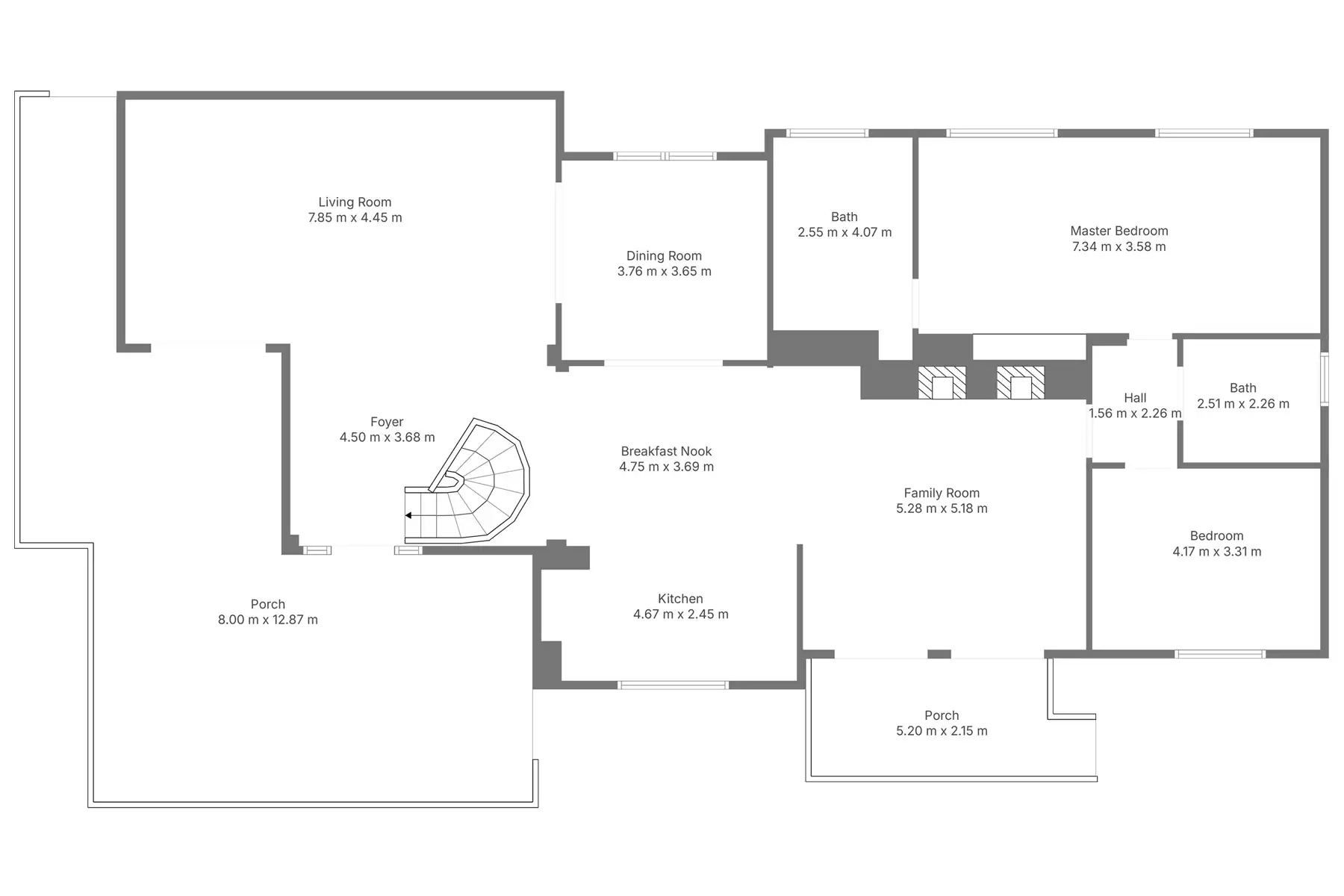
A virtual tour does not replace photographs. Photographs lead the listing and win the first click, and the tour is for the viewer who wants to go further. A floor plan answers a different question: how is the property organised? A schematic floor plan communicates the general layout at a glance, and the tour lets the viewer walk through it.
In practice the order matters. Put the strongest photographs first, place the tour link where it is easy to find, and let each piece do its own job: the photographs attract attention, the floor plan explains the layout and the tour lets interested viewers explore at their own pace.
If you manage several properties, consistency helps. Using the same format, the same naming and the same placement of the tour link across the whole portfolio makes your listings easier to compare and easier to trust, and it saves your team from explaining each tour from scratch.
Keep expectations realistic as well. Schematic floor plans are communication tools, not technical documents, and they should not be used for building works, legal matters or official procedures.
For holiday homes, a tour together with photographs that show the real beds, terraces and views helps set honest expectations. This combination is a core part of our work for vacation rental agencies. In an empty property, virtual staging can also be added inside the tour; when furniture is added digitally, it is good practice to present it as such.
Preparing the property for a tour
A tour shows every angle, so there is nowhere to leave things out of frame. Tidy the rooms, put personal items away, open the blinds and keep the property free of people and other activities while the capture takes place. Our property preparation guide lists what to do before a session, and it applies to tours as well as photographs.
Some mistakes come up again and again. Doors left closed hide how the rooms connect, so open the interior doors that should be part of the visit. Mirrors can reflect the person carrying out the capture, so it helps to know where they are. Blinds half open create uneven light, and stray objects that would be out of frame in a photograph suddenly appear in a 360° view.
If you are unsure whether a tour is worth it for a particular property, look at the property rather than the technology. A compact flat with one clear layout rarely needs more than good photographs and a floor plan. A villa with levels, terraces and a pool is where seeing the whole space makes the difference. Our page on 360° virtual tours shows examples of both kinds of space.
If you want the wider picture, our complete photography guide explains how architectural and real estate photography relate and what makes any image work.
Frequently asked questions
-
What is a 360° virtual tour?
It is an interactive representation of a property that the viewer explores by clicking or tapping. At each point the viewer can look around in every direction and move to the next room, on a phone, a tablet or a computer.
-
Does a virtual tour replace in-person viewings?
It does not replace them, but it helps viewers understand the property and decide which ones deserve a visit. For remote buyers it is often the first step before travelling.
-
Can a virtual tour be published on property portals?
Our Matterport tours are compatible with Idealista and many other portals. Each portal has its own requirements, so it is worth checking them before you publish.
-
How long does a virtual tour stay online?
It depends on the provider, so ask. In our case the tour is hosted on Matterport, hosting for 180 days from delivery is included, and it can be renewed. A client with a Matterport account of their own can have the tour scanned and hosted there.
-
Can an empty property be furnished inside the tour?
Yes, through virtual staging inside the tour. When furniture is added digitally, it is good practice to present it as such, and portals or local regulations may require it.
-
Do I need to prepare the property for a virtual tour?
Yes, and more than for photographs, because a tour shows every angle. The property should be clean, tidy and free of people and other activities during the capture.
-
Can viewers explore the tour on a phone or tablet?
Usually yes. Most tours run in the browser on phones, tablets and computers without installing anything, but it is worth testing a finished example on the devices your audience uses.
-
Is a virtual tour useful for vacation rentals?
It can be. Guests can understand the sleeping arrangements, the outdoor areas and how the spaces connect before they book, which helps set honest expectations.