When an agency or a rental manager looks for a property photographer, the search usually starts with a portfolio and ends with a feeling. That feeling can be right, but it is worth backing it with a few concrete checks, because the photographs will sit at the front of every listing for as long as the property is on the market.
This guide explains what a professional adds beyond the camera, why the word itself tells you little, and how to evaluate a photographer in eight steps. It also lists the warning signs we have learned to spot and shows what a clear process looks like from the first message to the final download.
What a professional brings beyond the camera
A camera is only part of what you hire. Good equipment is within anyone's reach, and a phone can handle a simple scene well enough. What a professional adds is the part you cannot see in a single file: decisions about light, timing and composition made across many properties, and a process that makes the result repeatable. In practice that means:
- Control of difficult light. Bright windows, mixed colour temperatures and shaded rooms are routine work, not a gamble.
- Consistency. The same camera height, the same colour treatment and the same straight verticals in every image and across every property.
- Time. Someone else spends the hours waiting for the light, adjusting the room and editing the files, while you keep selling or managing.
- Post-production. Exposures merged, verticals corrected, colour balanced, and files prepared in the formats portals expect.
- Rights and compliance. A licence to use the images and, when a drone is involved, aerial footage flown legally.
- Accountability. A person who works with professional diligence, listens to your preferences and keeps you informed if anything changes.
None of this guarantees a sale, and no photographer can honestly promise one. It does remove avoidable weaknesses from the most visible part of a listing. If you want to see how we approach it, our real estate photography service page describes what is included.
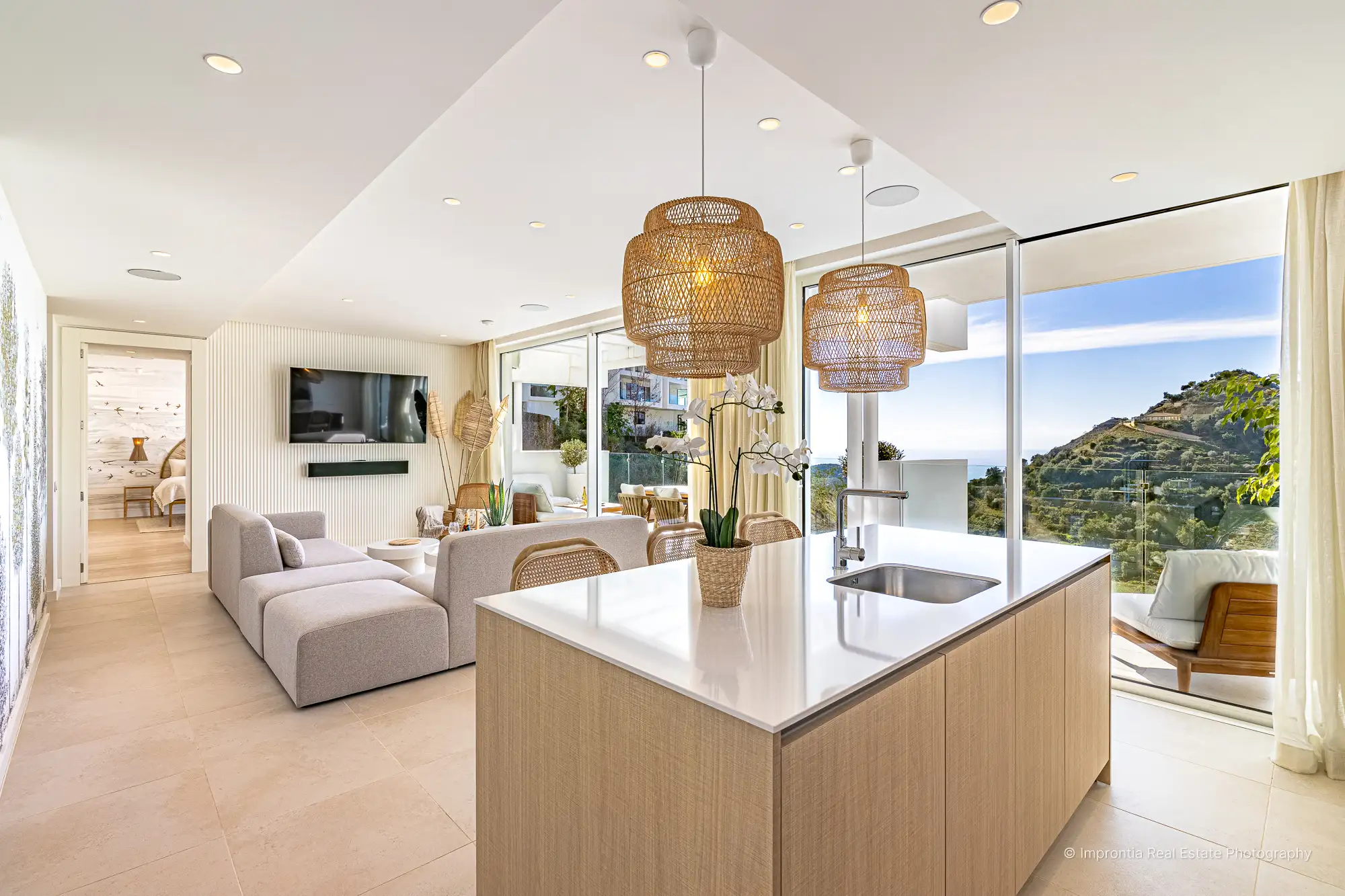
On the Costa del Sol, where villas combine glass walls, terraces and strong sun, these differences show quickly. A room that looks inviting in person can turn out dark or flat in a photograph if the light is not managed, and the reverse is also true: a well handled image makes the property look the way it feels to be there.
Why the word "professional" is not enough
In practice the term is loose. A photographer who earns most of their income from photography can call themselves professional, and no licence or degree is needed to work in property photography. Many excellent photographers come from architecture, interiors or advertising. Others have simply bought a good camera and a website. The title tells you little; the work and the way of working tell you a great deal.
Specialisation matters more than the label. Photographing property is its own discipline, with its own problems: small rooms, mixed light, reflective surfaces and volumes that distort easily. A fine portrait or wedding photographer can struggle with a narrow hallway lit by two windows and a downlight. Experience with the exact type of property you need to show, whether a city apartment, a vacation rental or a villa with a pool, is worth more than a long list of other credits.
A useful shortcut is to ask who else relies on the photographer. Agencies, rental managers and developers that book the same person again and again have already done the testing for you. Long relationships are rarely built on a single good portfolio. They are built on punctuality, clear communication and consistent results.
How to read a portfolio
Ask for a complete shoot of a property similar to yours, not a selection of best shots. Then look at it the way a buyer would, from the first image to the last. A strong photographer is consistent from one frame to the next and from one property to another, because consistency is the sign of a method.
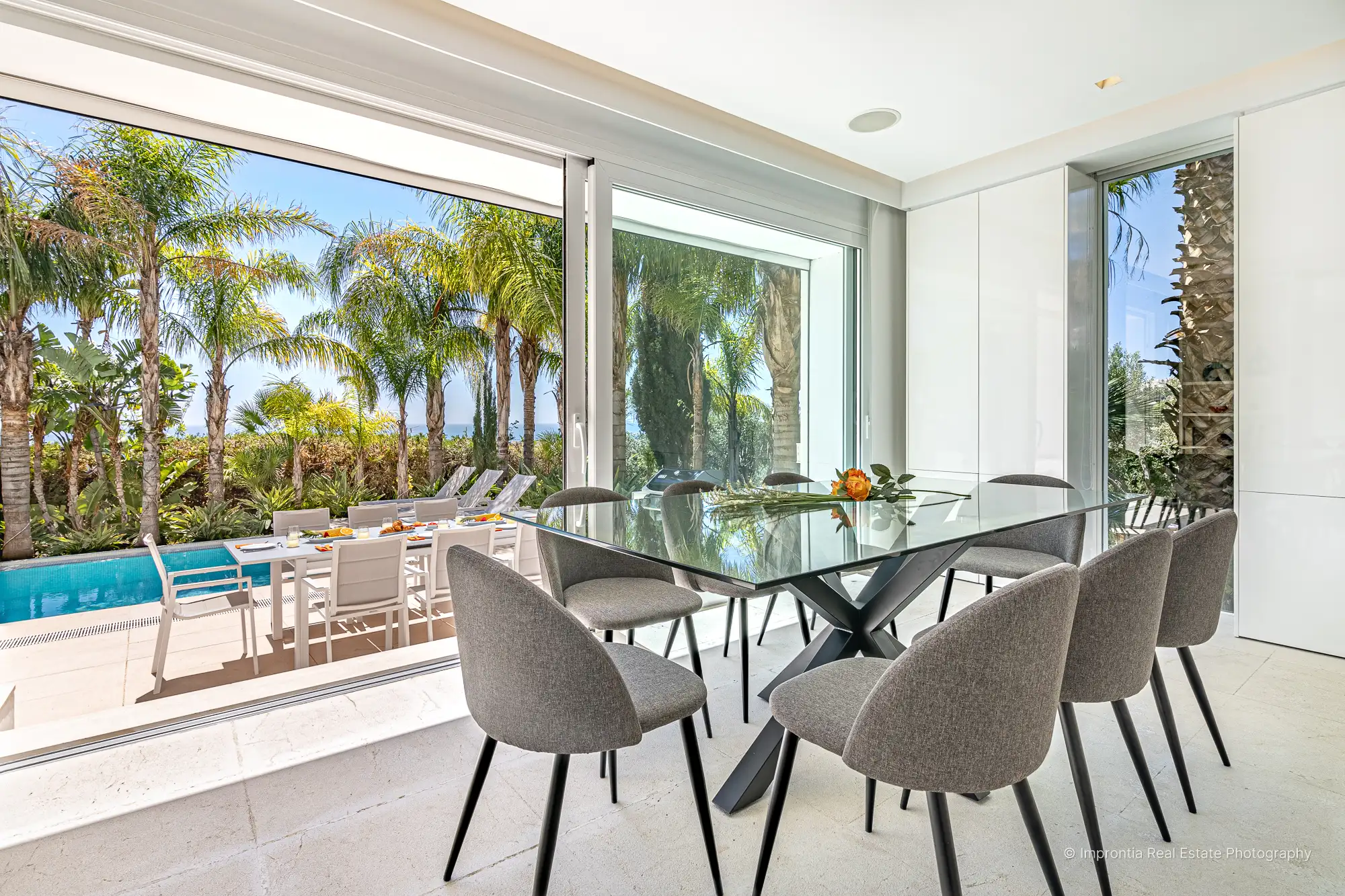
Pay attention to the conditions as well. Does the portfolio include gloomy days, small spaces and dark rooms, or only perfect villas at noon? Are the exteriors as convincing as the interiors? Is there a mix of wide views and details? And if you manage holiday homes, does the work show the real sleeping areas, the real terrace and the real view? That honesty is a core part of what we do for vacation rental agencies.
Eight checks before you hire
- Complete shoots of similar properties. Ask to see full sets, not highlights, and confirm the photographer has worked with your type of property.
- A consistent style. Colour, camera height and straight verticals should look the same across different properties.
- A clear editing approach. Ask what is corrected as standard, what can be retouched on request and what is never altered, such as structure or views. Removing objects, for example, is often a separate request, so it helps to know in advance.
- Planning around light. A good photographer asks about the orientation of the rooms and the views, and plans the order of the session so that each space is photographed when its light works best, instead of shooting every property in the same sequence.
- Defined delivery. Formats, resolution, compatibility with portals, how long the files stay available and whether originals are included. Practices differ, so ask. Check too that you receive a resolution suited to your portals and website and a lighter version for email and social media.
- Timelines and communication in writing. An estimated delivery date, a single point of contact and answers within a reasonable time are signs of a reliable process.
- Usage rights. A clear licence: which uses are covered, such as portals, your website and social media, and which need an extra licence, such as print. Ask also whether it has a time limit.
- Specialist services done properly. If you need aerial drone photography or 360° virtual tours, ask whether the pilot is certified and registered under current regulations and whether the tour format works with the portals you use.
When you compare proposals, compare scope and not only the portfolio. Two quotes can look alike and include very different things: the number of finished images, the level of editing, whether twilight or drone images are part of it, how and when the delivery happens. A clear breakdown makes that comparison straightforward, and a photographer who is reluctant to provide one is telling you something.
Red flags to watch for
- No complete shoots to show, only a gallery of selected highlights.
- The same extreme wide angle in every image, with stretched corners and leaning walls.
- Colour that changes from one image to the next, or windows burnt white.
- Vague answers about timelines, formats or who can use the images and where.
- No explanation of what the editing includes and what it leaves untouched.
- No references from agencies, managers or developers who work with them regularly.
One of these signs is not a verdict, but several together deserve a second conversation before any date is booked. Trust your own reading of the portfolio too. If the properties in it look different from how you would expect them to feel in person, ask yourself whether you would accept that gap in your own listings.
What a clear process looks like
A good process is easy to describe in a few lines. Ours works like this. We prepare a quote tailored to the property and its services, with a breakdown so everything is clear from the start. Once the quote is approved and the advance payment is made, we agree a date, taking into account the time of day when the main spaces receive the best natural light. Before the session, the owner or manager prepares the property with the help of our property preparation guide.
The session usually takes one to two hours, and longer for large villas; the quote states the estimated time on site. After editing, which normally takes two to four business days, the material is delivered digitally through a download link kept available for sixty days. Images are supplied as JPG files at 3840 pixels on the longest side, and virtual tours work with Idealista and other portals.
Notice also whether the photographer asks questions: about the property, about who will look at the images, and about where they will be published. A shoot for a luxury sale and one for a holiday rental share the same technique but not the same priorities, and the right questions show that someone is thinking about your goal and not only about the camera.
You do not need to be present, but the property must be ready and free of other activity during the shoot. If a photographer can explain each step as clearly as this, and put the dates and the deliverables in writing, you are probably dealing with someone who works with method.
If you want the wider picture, our complete photography guide explains how architectural and real estate photography relate and what makes any image work.
Frequently asked questions
-
How do I know if a real estate photographer is really professional?
Look at the work and the process rather than the title. A complete shoot of a similar property, consistent results across different properties, a clear explanation of editing and delivery, and references from agencies tell you more than any credential.
-
Is it better to choose a photographer who specialises in property?
Usually, yes. Property photography has its own difficulties: small rooms, mixed light, bright windows and reflective surfaces. A photographer who works with them every week has solved them many times, while a good portrait or event photographer may be less comfortable with them.
-
What should I ask to see before hiring?
A complete, unedited-by-selection shoot of a property similar to yours, with interiors and exteriors, and the references of agencies or managers who work with the photographer regularly.
-
Do I need to be present during the shoot?
Not necessarily. The photographer needs access to the property, coordinated beforehand, and the property must be ready. Many clients prefer not to spend sales time on the session.
-
How long does editing usually take?
It depends on the number of images, the season and the level of editing requested. Ask for an estimated delivery date in writing. In our case it is usually between two and four business days, and the quote gives the estimated delivery time.
-
In what format are the images delivered?
Ask before you book. Our images are delivered as JPG files in four variants: high resolution (3840 pixels on the longest side, ready for portals and websites) and low resolution, each with and without your logo. Original RAW files are not part of the delivery.
-
Can I use the images on portals, my website and social media?
You should be able to, but confirm it in writing. A licence of use that covers your own channels should be part of the agreement from the start.