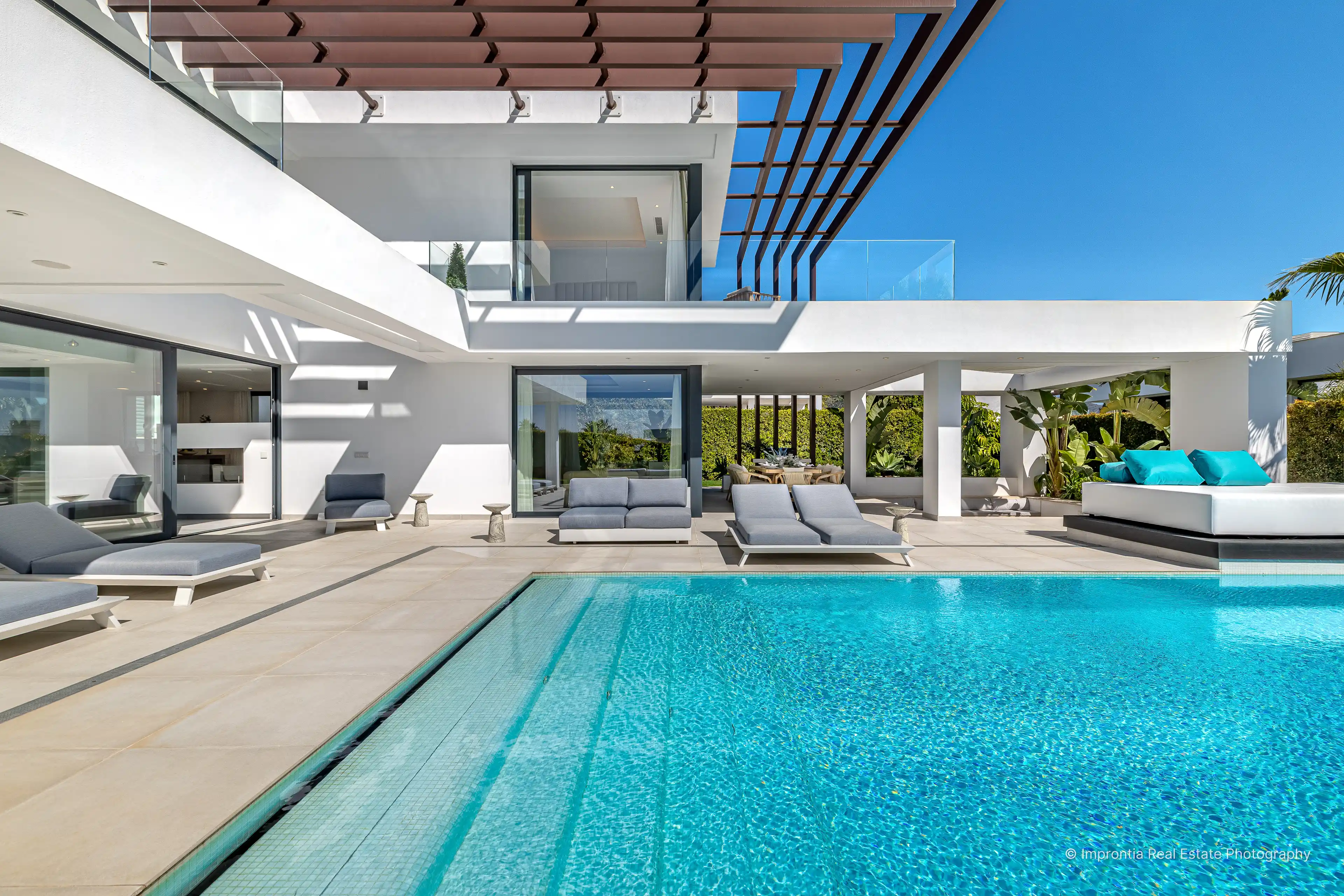
Open a handful of villa listings on the Costa del Sol and the photographs start to blur together: wide rooms, bright windows, a pool. Then one set stops you. The house is not necessarily better. What has changed is that someone decided what each image was about.
That decision is what architectural photographers do all day, and it travels well. You do not have to turn a listing into a magazine spread to benefit from it. This article covers what is worth borrowing for a property listing, when it is worth asking for that level of care, and how to brief a photographer so the shoot aims at the right things.
What architectural photography adds to a listing
Architectural photography and real estate photography share a camera and most of a toolbox. They differ in the question each one asks. A standard property shoot asks what the buyer needs to see: every room, the layout, the terrace. An architectural approach asks what the building is about, then builds the set around the answer. Our guide to architectural and real estate photography compares the two in full. Here we stay practical.
A listing that borrows the second approach does not need more images. It needs images with a reason to exist. A hallway frame that shows how the staircase meets a double-height window earns its place. A fourth view of the same living room does not.
None of this replaces the basics. Straight verticals, honest colour and a sequence that follows a visit still come first, and we go through them in our piece on quality real estate photographs. Think of what follows as the next layer, for properties that deserve it.
One idea per image: composition with intent
Before pressing the shutter, an architectural photographer can usually say in one sentence what the frame is for: the symmetry of a façade, the line of a cantilevered roof, the way a kitchen opens onto a terrace. When that sentence is missing, the image tends to be a record, and a record is easy to scroll past.
Frontal views and strong lines
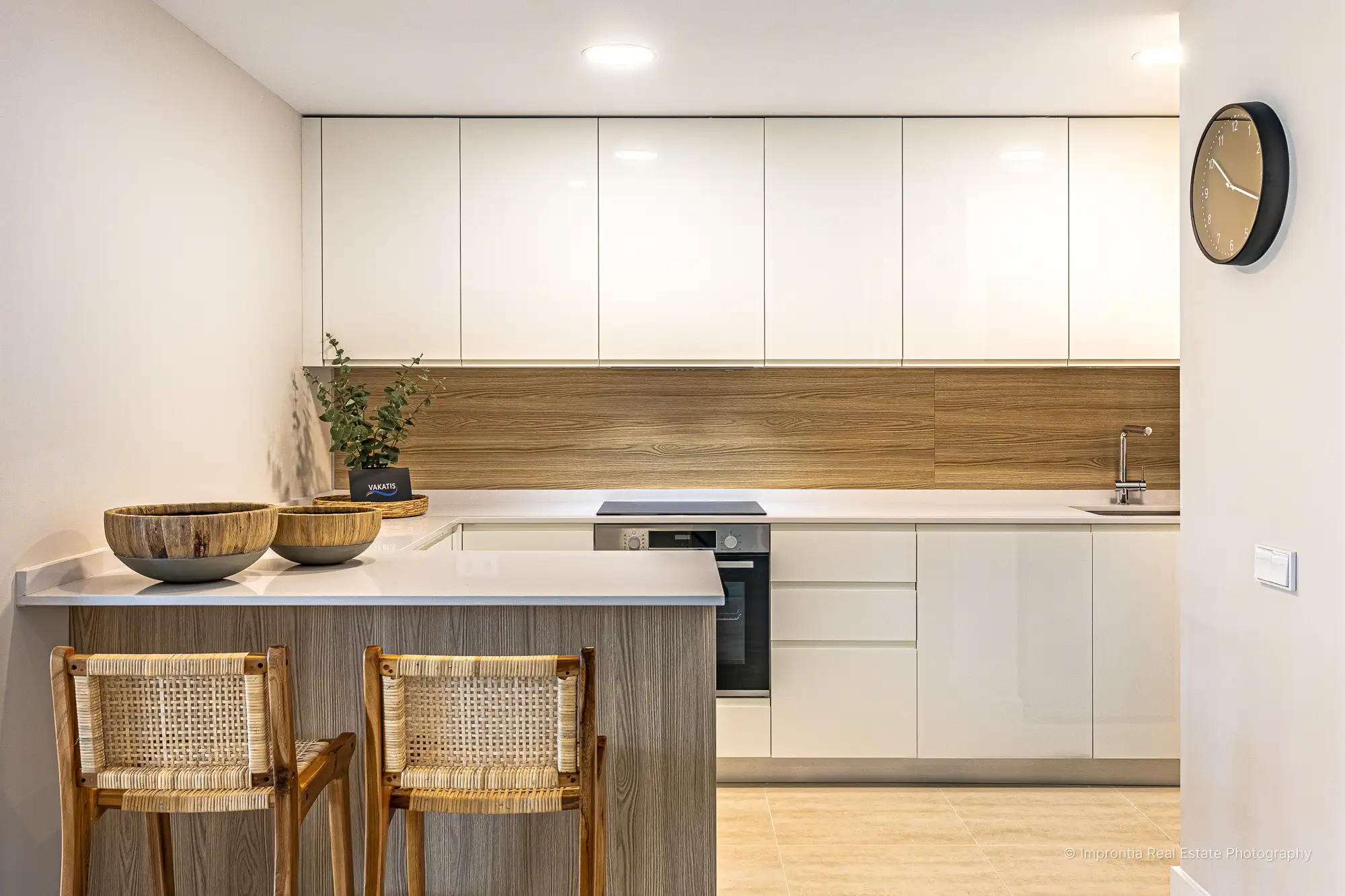
A frontal view, with lines running towards a single point, makes a space feel calm and ordered. It suits kitchens, corridors and entrance halls, where the eye settles. Oblique views suit open-plan living areas, where depth matters more than calm. The right choice depends on the room, and a good photographer will often take both and keep the one that reads better.
Verticals, height and what stays out
Verticals stay vertical. That is the baseline for any property, and it matters more here because architecture is made of straight lines, so a leaning wall is an obvious mistake. Camera height deserves the same care: a consistent, moderate height keeps proportions believable from the first image to the last.
Then there is subtraction. In an architectural frame everything inside is part of the composition, so a visible cable, a half-cut chair or a stray bin weakens the whole picture. Much of that is settled before the camera comes out, which is why our property preparation guide is worth sending to owners ahead of the visit.
Light you choose, not light you find
On the Costa del Sol the light is generous, which is also the difficulty. Midday sun flattens white façades, terraces burn out and interiors fall into shadow. Architectural work treats light as the main material and plans around it: which side of the house faces the sun at what hour, where a shadow will cross a wall, when the pool picks up the colour of the sky.
In practice the order of the session follows the property rather than a fixed timetable. A west-facing terrace may be at its best late in the day, while a bedroom with east windows is finished by late morning. Weather can move a session, which is one more reason to leave some margin in the schedule.
Twilight, real and converted
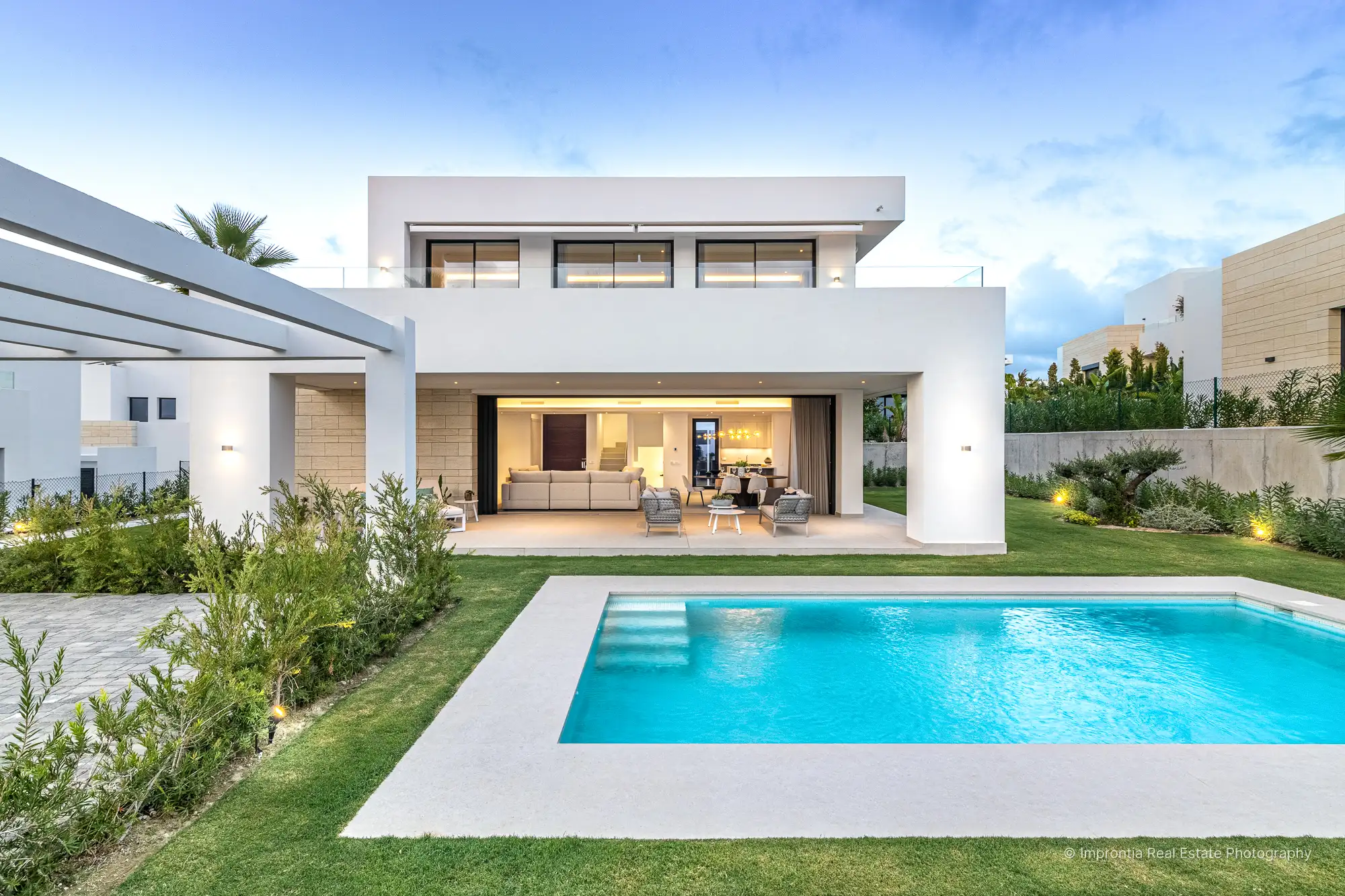
Twilight is where the architectural approach is easiest to see. In the minutes after sunset the sky still carries colour and the property's own lighting starts to count: warm interiors, a lit pool, wall lights along a path. It suits villas and developments where the lighting design is part of the appeal, and it needs precise timing, so it is planned in advance and requested as an optional addition to a session.
There is also a route that is not real twilight: converting a daytime image into a dusk one in post-production. We do not apply that by default. It is not part of standard editing, which corrects what the camera captured and does not replace skies. When a property cannot be photographed at dusk because of access, timing or weather, a day-to-dusk conversion can be requested as an additional service, agreed beforehand and quoted separately.
Our advice is to treat it as the second choice. A real twilight frame usually carries reflections and a glow that are hard to reproduce, and a buyer who visits in the evening should recognise the house they saw online.
Details and materials: the texture of quality
In higher-end properties, materials do a good share of the selling. Stone, oak, plaster, brass, the grain of a worktop: these signal quality, and a wide shot flattens them. A few tighter frames fix that. A close view of joinery, a window reveal or a lit niche tells the viewer what the home is made of, and it gives the set its pauses.
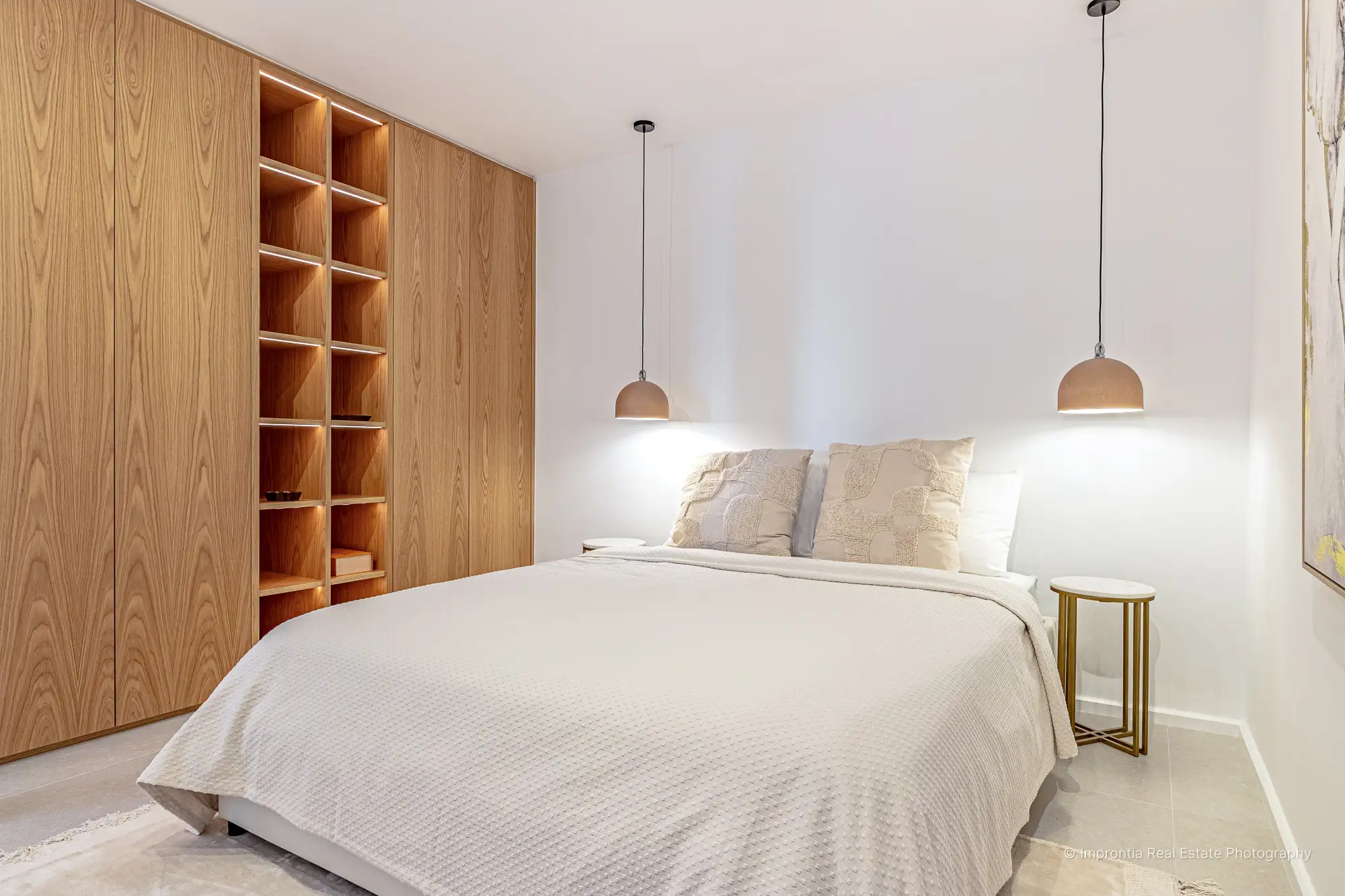
Detail frames also solve a practical problem. They let you show finishes and craft without cramming everything into one wide shot. Two or three per property are often enough, placed after the establishing views and before the next space. In a development, the same detail repeated across units helps a buyer compare finishes, provided the framing stays consistent.
When this level of care pays off
Not every listing needs it, and saying so is part of the job. A well-composed standard shoot is the right answer for many apartments and routine rentals. The architectural approach earns its extra attention in cases like these:
- New developments and show homes, where the architecture is the product and several units have to read as one project. It is the kind of project behind our photography for builders and contractors.
- Villas with a strong design idea: a long horizontal roofline, double-height glazing, a house that opens to its garden.
- Homes designed by an architect or an interior designer who will want to show the work in a portfolio or in the press, as in our property photography for architects.
- Agencies that want a recognisable visual signature across all their listings.
- Properties where the setting and the building are the story together, such as a plot with views over the sea or the valley.
In those cases the images do double duty. They sell the property, and they show that the agency or studio understands design.
How to brief a photographer for an architectural result
A good brief takes ten minutes and changes the whole session. You are not directing the shots: the photographer is hired for judgement and keeps the technical and creative decisions. What you can do is make sure that judgement works with the right information, before the day or on it. If you are still deciding who to brief, our guide to choosing a real estate photographer lists what to check first.
| What to tell the photographer | Why it helps |
|---|---|
| The two or three features that sell the property | They decide the lead images and the order of the set |
| Who the buyer or guest is | It shifts the emphasis between design, setting and amenities |
| Orientation and the hours the house looks best | It helps plan the order of the session |
| Whether twilight is wanted | It has to be planned and agreed before the day |
| References you like | They give you a shared vocabulary; they guide the approach and are not copied |
| Where the images will be used | Web and portals are covered by the standard licence; print needs another |
| Anything that will change before the shoot, such as works in progress, planting or furniture | It avoids photographing what will not be there |
Then prepare the property. Clean, tidy and minimal beats improvised on the day. If a house needs styling beyond tidying, we recommend a specialist, because home staging is not part of what we do.
The aim is not a listing that looks like a magazine. It is a listing that looks like someone cared about the house, and buyers tend to notice that before they can say why.
Frequently asked questions
-
What is the difference between architectural photography and real estate photography?
They share equipment and most techniques. Real estate photography shows a buyer every space and the layout; architectural photography asks what the building is about and builds the images around that idea. A good listing set can use both.
-
Does every listing need an architectural approach?
No. A well-composed standard shoot is the right answer for many apartments and routine rentals. The extra care pays off in new developments, villas with a strong design idea, architect-designed homes and agencies that want a recognisable visual signature.
-
Is twilight photography worth it?
It depends on the property. It works best where the lighting design, the pool or the glazing are part of the appeal. It needs precise timing, so it is planned in advance and requested as an optional addition to a session.
-
Can a daytime photo be turned into a twilight one?
It can be requested as an additional service, agreed beforehand and quoted separately. It is not part of standard editing, which does not replace skies, and no AI-generated edits are applied unless the client asks for them. When the property can be photographed at dusk, a real twilight image is usually the better result.
-
Does magazine quality mean heavier editing?
No. It comes from composition, light and patience on site. Editing should correct what the camera captured, such as verticals, exposure and colour, and leave the property recognisable to anyone who visits it.
-
Can I use the photographs in a magazine or an advert?
The delivered images can be used on the agency website, its own social channels and listing portals. Printing them in magazines, adverts or other printed media requires an additional licence, and when images are supplied to the press the studio credit must appear next to them. It is better to settle this before the shoot.
-
Can I choose the angles and the style?
You can share preferences and references before or during the session. The technical and creative direction stays with the photographer, who works from their own judgement and method. That is usually what produces a coherent set.